CLICK CLICK
PLAY PLAY
CLICK & PLAY


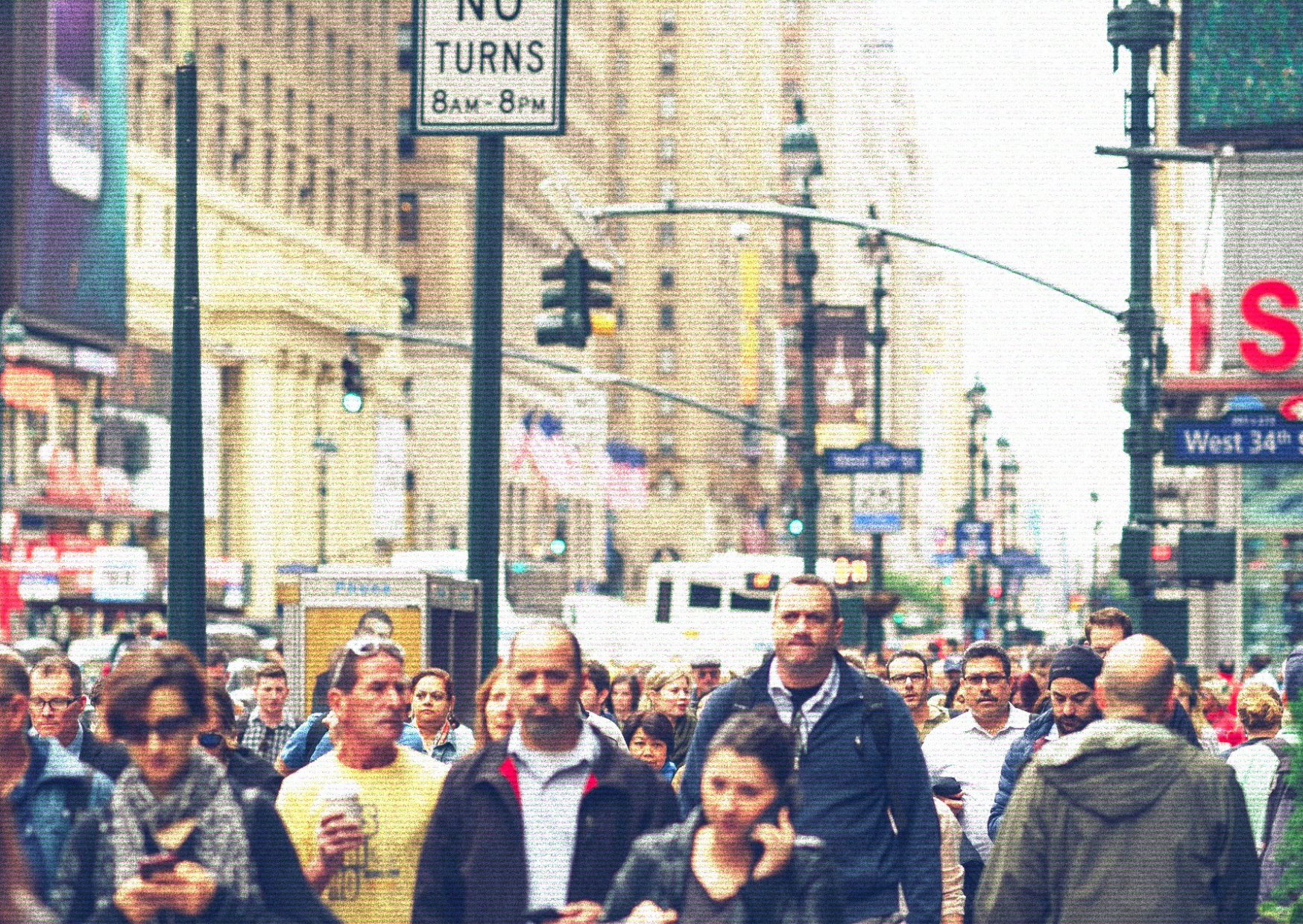
It is difficult to accurately gauge how old the population is based solely on everyday observations, and there are dynamics in the context of large cities that prevent such observations. Fortunately, however, data exists and can be transformed into allies in the development of public policies, especially since the trend toward population aging is not only a reality but will also be a constant over the coming decades.
The definition of an older adult changes as social security and active labor criteria change. However, there is a standard definition that falls between two general adoptions: 60+ or 65+. This project aims to visualize the condition of older adults in New York City by viewing statistical data that allows us to understand the demographic profile. To this end, the most recent data on the population over 65 was considered.
The country has undergone a profound demographic transformation over the last decade. In virtually every state, the elderly population has grown by at least 20% since 2014. States such as Alaska and Idaho lead this expansion, showing that population aging is no longer a phenomenon restricted to traditional retirement destinations such as Florida. The pace of population aging significantly exceeds the growth of younger age groups, with long-term economic, social, and fiscal implications.
Fewer children than elderly people?
Between 2020 and 2024, the number of states where seniors outnumber children rose from 3 to 11.
Which ones are they?
2020 (3): Maine, Vermont, and Florida.
2024 (+8): Delaware, Hawaii, Montana, New Hampshire, Oregon, Pennsylvania, Rhode Island, and West Virginia were added.
If we look at more widely spaced data, from 2000 to 2023, we see that the elderly population in the United States grew by 69%, and the country's total population also expanded at a relatively faster pace during that period. In contrast, when we zoom in on New York City, we see that overall population growth has been slow, and although the elderly population has grown by 53%, this rate was 17 times faster than the city's total population growth.
But how many seniors do we have in NYC, and how many will we have? Estimates indicate that by 2040, one-quarter of the population will be over 65 years old.

Country of birth and race show that aging in New York is multicultural, requiring services and information in multiple languages and sensitive to cultural diversity in order to be effective.

In New York City, most seniors are renters (54.1%), which makes them much more vulnerable to rent increases and housing insecurity.
An aging population that is aging at a faster rate than the number of new births also requires new structures that guarantee quality of life. In the main reports on aging in New York, the treatment of aging does not involve promoting birth rates, but rather creating structures that respond to essential issues.
Below, roll the dice and win one of 11 relevant facts about why investing in elder care structures is important. The information is taken from the NYC Department for the Aging and is called The State of Older New Yorkers Building an Age-Inclusive Future 2025 (this report considers people over 60 to be elderly).
Below are the documents consulted for support:
Department for the Aging NYC Aging All Contracted Services: https://data.cityofnewyork.us/Social-Services/Department-for-the-Aging-NYC-Aging-All-Contracted-/cqc8-am9x/about_data
The State of Older New Yorkers: https://www.nyc.gov/assets/dfta/downloads/pdf/reports/the-state-of-older-new-yorkers-2025-v3.pdf
Table S0103: https://data.census.gov/table/ACSST1Y2024.S0103?g=160XX00US3651000
Older Adults in New York City: Demographic and Service Trends: https://www.osc.ny.gov/files/press/pdf/report-22-2025.pdf
Older Adults Outnumber Children in 11 States: https://www.census.gov/newsroom/press-releases/2025/older-adults-outnumber-children.html
Age Inclusive American-Cities: https://www.nyc.gov/assets/cabinetforoldernewyorkers/downloads/pdf/Age-Inclusive-American-Cities-Guidebook.pdf
Which states have the largest elderly populations?: https://usafacts.org/articles/america-is-getting-older-which-states-have-the-largest-elderly-populations/